When you encounter a serious accident, knowing exactly where to look for injuries is vital. In professional first aid, we use a specific tool called DCAP-BTLS to perform a thorough head-to-toe check. This mnemonic helps rescuers identify hidden trauma that might not be obvious at first glance.
DCAP-BTLS is just one of many essential first aid acronyms that rescuers use to stay organized during a crisis.
Whether you are a workplace first aider or a concerned bystander, mastering this rapid assessment guide ensures you don’t miss critical signs of injury. It is a standard part of first aid training in BC and is essential for anyone pursuing Occupational First Aid.
What is DCAP-BTLS in First Aid?Â
DCAP-BTLS is a mnemonic used by first aiders and paramedics to systematically check a patient for physical signs of injury. It stands for Deformities, Contusions, Abrasions, Punctures, Burns, Tenderness, Lacerations, and Swelling. This tool is used during a secondary assessment (physical exam) to identify trauma across the body after life-threatening issues like breathing or massive bleeding have been controlled.
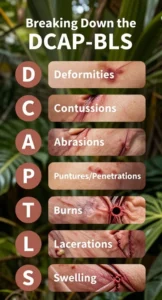
Breaking Down the DCAP-BTLS Acronym
To perform a professional assessment, you must check the body for these eight indicators. Each letter represents a specific type of injury you might find in an emergency procedure:
- D – Deformities: Look for body parts that appear misshapen or bones that seem out of place. (Note: In high-impact accidents, you might even check for chest deformities; learn more in our blog about whether CPR can break ribs).
- C – Contusions: These are bruises. Look for broken blood vessels or discoloration under the skin.
- A – Abrasions: Check for “road rash” or scrapes where the surface of the skin has been damaged.
- P – Punctures/Penetrations: Look for holes caused by sharp objects like glass, nails, or tools.
- B – Burns: Identify skin damage caused by heat, chemicals, or electricity. (See our guide on first aid for burns).
- T – Tenderness: Feel for areas that cause the patient pain or sensitivity when you touch them (palpation).
- L – Lacerations: Look for deep cuts, tears, or open wounds in the skin.
- S – Swelling: Watch for enlarged tissues caused by internal bleeding, fluid buildup, or inflammation.
When to Use DCAP-BTLS
In any emergency, you must always follow the “Primary Survey” first. This means checking the ABCs of first aid (Airway, Breathing, and Circulation). Once you know the person is breathing and you’ve checked their responsiveness using the AVPU scale, you move to the “Secondary Survey.”
During this phase, you perform a head-to-toe exam using DCAP-BTLS. You start at the head and work your way down to the toes. This ensures no hidden injuries go untreated while waiting for paramedics. If you find a wound, you should immediately grab your personal first-aid kit to begin treatment.
Why Rapid Trauma Assessment Matters
Using a structured checklist like DCAP-BTLS ensures:
- Comprehensive Care: You won’t miss a broken bone just because you were distracted by a smaller cut.
- Professional Communication: You can tell 911 dispatchers exactly what you found. This is a key skill taught in Standard First Aid.
- Workplace Safety: It is a required skill for first aid attendants managing occupational health and safety.
Get Certified in BC, Canada
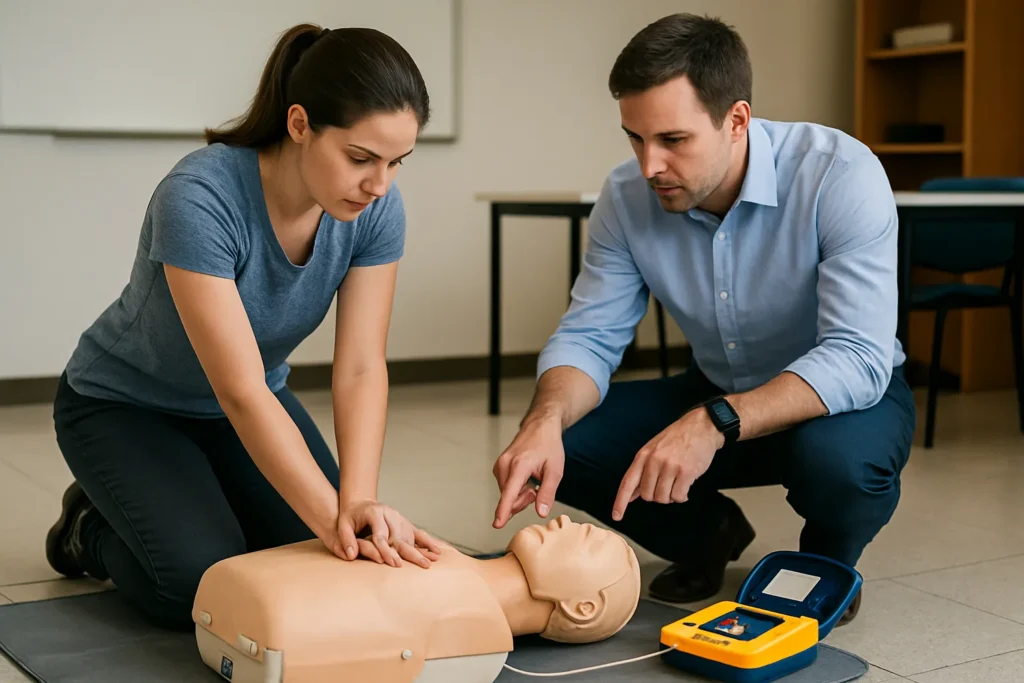
Reading about trauma assessment is a great start, but hands-on practice is how you build the confidence needed for a real emergency. At Primary Care First Aid, we teach you how to perform these exams in a classroom setting using real-world scenarios.
We offer certification across the Lower Mainland:
Not sure which level you need? Check out our guide on various first aid levels or visit our FAQ page.
Conclusion
The DCAP-BTLS in First Aid tool turns a chaotic emergency into a structured, life-saving process. By looking for deformities, swelling, and other signs of trauma, you provide the best possible care until professional help arrives.
Ready to gain the confidence to save a life? Browse our first aid courses and get certified today!