Asthma attacks can be scary, but knowing what to do can help save a life. Even if you don’t have medical training, you can still help. However, you should know the first aid for asthma attacks. In this blog, we will talk about how to perform first aid for asthma attacks. We hope this guide will help you in this critical situation.
What is an Asthma Attack?
An asthma attack occurs when the airways in the lungs become narrow and swollen. This makes it hard for the patient to breathe. After an attack, the person may start coughing or feeling tightness in their chest. Sometimes, they also struggle to speak or feel very scared as they can’t get enough air.
Asthma attacks can be mild or serious. Some get better quickly with an inhaler. However, others may need emergency help.Â

Why Asthma First Aid Training is Important?
First aid training for asthma is key because it helps people respond quickly. Knowing what to do in these situations can prevent serious complications. Let’s find out more about them here:
Saves Lives
If someone cannot breathe, they need help fast. Basic first aid training teaches people how to act quickly. For example, using an inhaler the right way can stop an attack from getting worse. In serious cases, knowing when to call for emergency help can save a life.
Reduces Panic
Asthma attacks can be scary for both the person having it and those around them. Standard first aid training helps people stay calm and take the right steps. When people know what to do, they feel more confident.
Teaches Proper Inhaler Use
Many people do not know how to use an inhaler correctly. First aid training shows the right way to use it.

Helps in Public Places
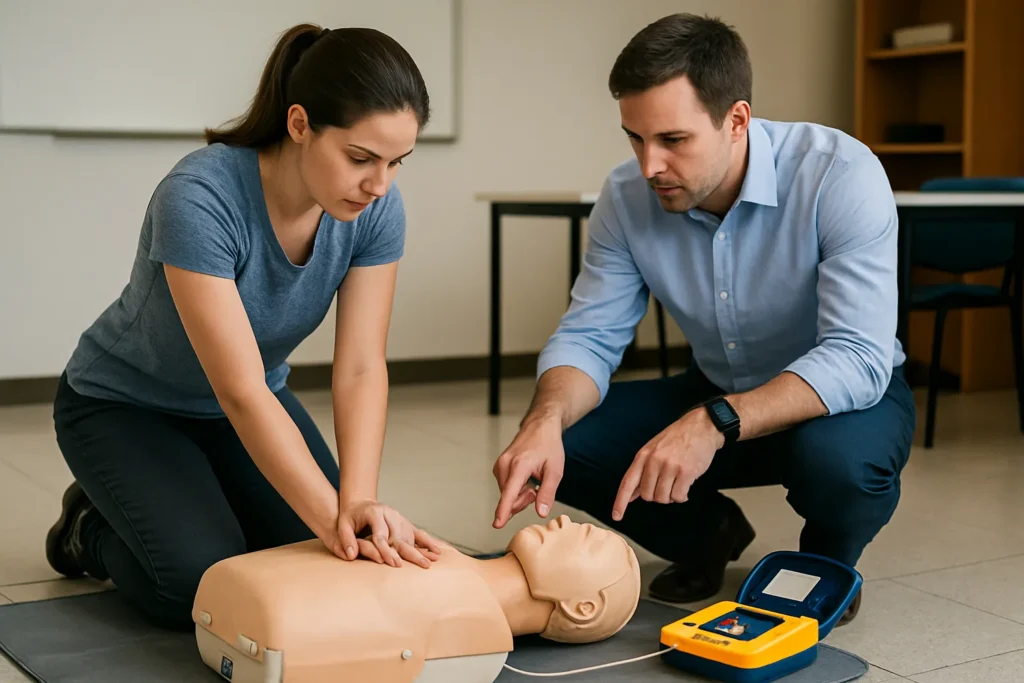
Asthma attacks can happen anywhere – at school, work, or in a store. If more people know first aid for common injuries, including skills like CPR/AED Level C, and how to care for asthma, there is a better chance that someone nearby can help. This makes public spaces safer for people with asthma.
Prepares for Emergencies
Sometimes, an inhaler may not work, or the person may not have one. Emergency first aid training teaches people when to call for medical help. It also shows other ways to help, like sitting the person up and encouraging slow breaths.
Signs and Symptoms of an Asthma Attack
Here are some symptoms early can help you:
- Persistent coughing, especially at night or after exercise.
- A high-pitched whistling sound while breathing, especially when exhaling.
- The person may feel like they can’t get enough air or may breathe faster than usual.
- The chest may feel tight or heavy.
- It may become difficult for the person to talk in full sentences.

First Aid Steps for Helping Someone During an Asthma Attack
Acting quickly and staying calm can make a big difference. This is why we have covered some steps for helping someone during an asthma attack.Â
- Keep yourself and the person calm. Panic can make it harder to breathe. You have to reassure them that help is on the way.
- Help the person sit upright because lying down can make breathing harder. Sitting up allows the lungs to expand more easily.
- If they have a quick-relief inhaler, help them in using it. They should take one puff every 30-60 seconds, up to 10 puffs if needed.
- Help them breathe slowly and deeply. This can reduce panic and allow more air into their lungs.
- If the person doesn’t improve after using the inhaler, call for emergency help immediately.

Frequently Asked Questions (FAQ)
Q: What is the first-line treatment for asthma attacks?
Ans: The first-line treatment for asthma attacks is using a quick-relief inhaler.
Q: What is the first thing to do when having an asthma attack?
Ans: The first thing to do is to stay calm, sit upright, and use a quick-relief inhaler.
Q: What is the best treatment for asthma?
Ans: The best treatment for asthma includes a combination of long-term control medications and inhalers.
Q: What is the reliever for asthma?
Ans: Ventolin (salbutamol) is a reliever for asthma. It is a quick-relief inhaler that helps open the airways by relaxing the muscles.
Q: How can I prevent respiratory emergencies?
Ans: You can prevent respiratory emergencies by managing underlying conditions. This includes asthma, avoiding allergens, and following proper hygiene practices.