If you find an unconscious person who is breathing but might have a neck or back injury, you face a difficult choice. You need to keep their airway open, but moving them could be dangerous. In a standard first aid class, you learn about the “recovery position.” However, when a spinal injury is suspected, experts recommend a specialized technique called the HAINES position.
In this guide, we will explain everything you need to know about the HAINES maneuver, why it is a vital part of workplace safety, and how to perform it correctly.
What is the HAINES Position?
HAINES stands for High Arm In Endangered Spine. It is a safe recovery position used for someone unconscious but breathing and may have a spinal injury.
The person’s arm is placed under their head to support it, acting like a natural splint. This allows one rescuer to gently roll them onto their side while keeping the head, neck, and spine aligned. It helps keep the airway open and reduces the risk of further spinal injury.
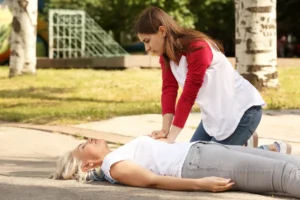
When Should You Use the HAINES Technique?
You should only move a person into the HAINES position if you are alone and help has not arrived yet. Use it when:
- They are unconscious: The person cannot respond to you but is breathing normally.
- Spinal Injury is Suspected: They have fallen from a height, were in a car accident, or have signs of head trauma.
- The Airway is at Risk: The person is vomiting, or you are worried their tongue will block their throat.
- You Must Leave: You are a lone first aider and need to leave the person for a moment to call 911 or grab a first aid kit.
How to Use the HAINES Position Safely: Step-by-Step
If you are in BC and waiting for paramedics to arrive, follow these steps to perform the HAINES roll carefully:
- Step 1: Position the Far Arm. Take the arm farthest from you and raise it straight up, past their head. The palm should face up. This arm is now a “pillow” or splint.
- Step 2: Secure the Near Arm. Take the arm closest to you and gently place it across the person’s chest.
- Step 3: Bend the Leg. Bend the leg closest to you at the knee. This will act as a “lever” to help you roll them smoothly.
- Step 4: Support the Head and Neck. Place your forearm under the person’s shoulder. Use your other hand to carefully cradle the base of their skull and jaw. This ensures the head doesn’t twist.
- Step 5: The Roll. Slowly and steadily roll the person away from you until they are on their side. Their head should now be resting on the arm you raised in Step 1.
- Step 6: Final Check. Ensure the head, neck, and spine are in a straight line. Check that they are still breathing.
Why is the HAINES Position Important?
In emergency medicine, we often talk about the “Life over Limb” rule. This means keeping someone breathing is the most important goal. However, if you suspect a person has fallen or been in a crash, their spine is “endangered.”
The HAINES position is the gold standard for single-rescuer spinal management. Here is why it is better than a standard recovery position in these cases:
- Neutral Alignment: It creates a flatter line for the neck, reducing the risk of bending the spinal cord.
- Airway Management: Just like the standard position, it allows fluids to drain from the mouth, which is a key part of the ABCs of first aid.
- Stability: Using the person’s arm as a support means their head won’t flop forward or backward during the roll.
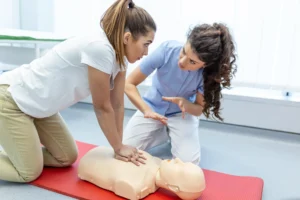
HAINES vs. Standard Recovery Position: What’s the Difference?
| Feature | Standard Recovery Position | HAINES Position |
| Best For | General unconsciousness (fainting, etc.) | Suspected spinal or neck injuries |
| Arm Position | Arm bent at a right angle | Arm raised straight above the head |
| Spinal Alignment | May cause slight neck bending | Keeps the spine in a neutral, straight line |
| Rescuer Needed | One person | One person (specifically designed for lone rescuers) |
Learning the difference between these levels of care is a major part of Standard First Aid training.
Common Mistakes to Avoid
When performing the HAINES maneuver, avoid these common errors:
- Rolling too fast: This can cause the head to “whip,” which is dangerous for the spine.
- Forgetting the airway: Always make sure the mouth is angled toward the ground so fluids can drain.
- Twisting the torso: Try to move the shoulders and hips at the same time so the spine stays straight.
Get Certified in British Columbia
First aid guidelines are updated regularly by organizations like the Red Cross to ensure the best survival rates. Reading a blog is a great start, but hands-on practice is the only way to truly be prepared for a real-life emergency.
Primary Care First Aid provides top-rated certification across the Lower Mainland. Whether you need a first aid course in Vancouver or Surrey, our instructors will help you master the HAINES position.
Browse all available course dates and locations.
Conclusion
The HAINES position is a life-saving tool that balances the need for an open airway with the need for a stable spine. By following these steps, you can protect a victim from further harm until professional help arrives.