Imagine you are sitting at a local coffee shop or attending a school basketball game when suddenly, the person next to you collapses. Their heart have stopped beating. In that terrifying moment, the clock starts ticking. Did you know that for every minute that passes without help, the chance of survival drops by about 10%?
This is why learning life-saving skills is one of the most important things you can do. However, when you start looking for a class, you might feel overwhelmed by all the choices. Should you do it online? Which certificate do you need? This guide is designed to help you navigate these questions and ensure you are choosing the Right CPR/AED Training Program for your specific needs.
1. Assessing Training Program Credibility
The first step in your journey is making sure the program you choose is the “real deal.” Not all certificates are equal. If you are taking a course for a job, like teaching, coaching, or nursing, your employer will likely require a certificate from a specific, recognized organization.
Accreditation and Certification
Look for programs that are accredited by major health organizations. In the field of emergency training, the Red Cross is considered a “Gold Standard.” Organizations like the Red Cross spend millions of dollars on research to make sure the techniques they teach actually work in real life. When a program follows these standards, it means they are following the most up-to-date 2024-2025 medical guidelines. Choosing a program that issues a Red Cross certificate ensures your training will be recognized by employers across the country.
Instructor Qualifications
A textbook can tell you what to do, but an experienced instructor can tell you how it feels. When researching a program, ask about the teachers. The best instructors are often people who have used these skills in the field, such as:
- Paramedics and EMTs
- Registered Nurses
- Firefighters
- Professional Lifeguards
Their real-world stories help move the lesson from “boring theory” to “practical reality.” They can explain what it’s like to perform CPR in a moving ambulance or a crowded room, which helps prepare you for the stress of a real emergency.
2. Training Facility and Resources
You wouldn’t learn to drive a car by just looking at a picture of a steering wheel, right? The same goes for CPR. The quality of the tools you use during training matters.
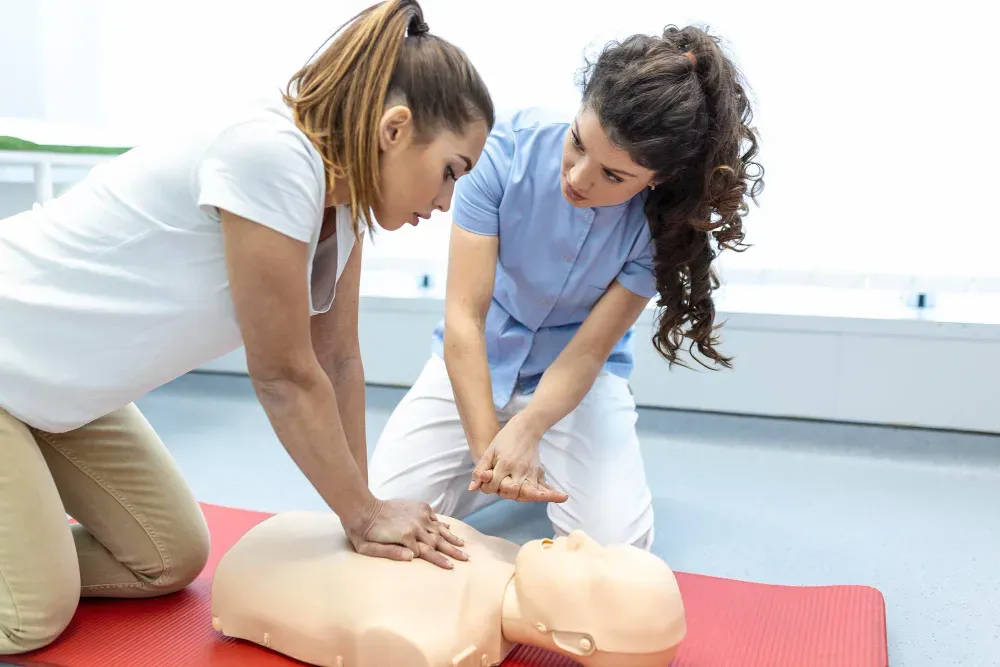
- High-Tech Manikins: Modern training centers use manikins (practice dummies) that have built-in sensors. These sensors give you instant feedback, like a green light if you are pushing deep enough or a red light if you are going too fast. This helps your brain and muscles learn the “rhythm” of life-saving.
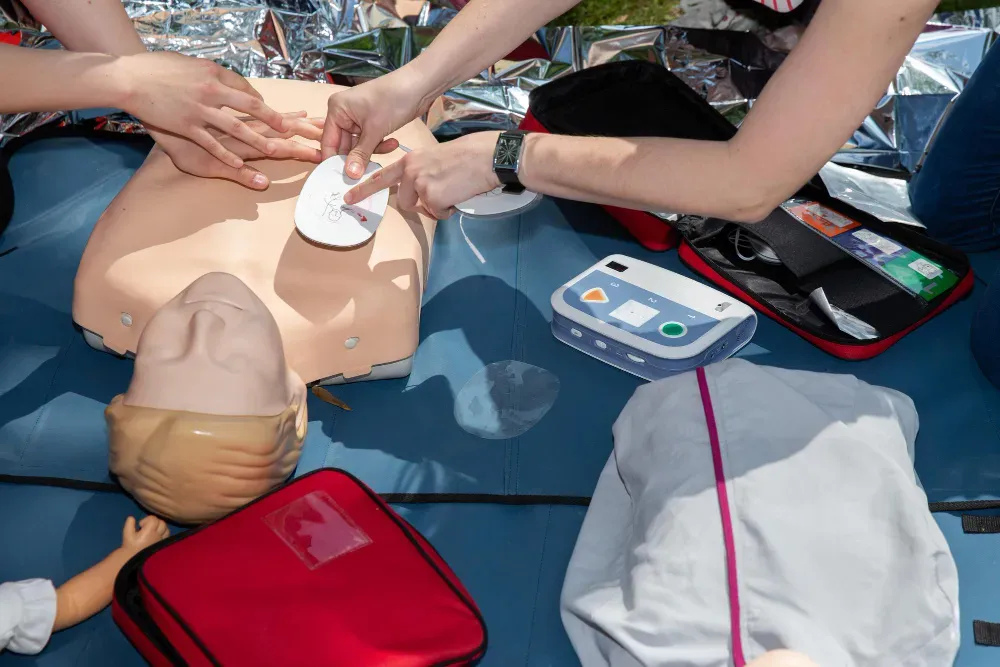
- Realistic AED Units: You should practice with a “Trainer AED.” These machines look and act exactly like the real ones found in airports and malls, but they don’t deliver a real shock. Practicing with the voice prompts of an AED helps reduce the “panic factor” during a real emergency.
- Simulated Scenarios: Look for a program that doesn’t just stay in a classroom. Some of the best courses involve role-playing where you have to “rescue” a manikin in a hallway, a kitchen, or even outside. This teaches you to think on your feet and check for safety before you start helping.
3. Tailoring to Your Learning Style
Everyone learns in their own way. When choosing the Right CPR/AED Training Program, you should pick the format that helps you remember the information best.
Online Training (The Flexible Choice)
This is great for people with busy schedules. You can watch videos, read the material, and take quizzes from your couch.
- Pros: Go at your own pace; revisit difficult sections as many times as you want.
- Cons: You don’t get to touch the equipment or get feedback on your hand placement.
- Note: Most jobs do not accept 100% online certificates. They usually require a “blended” version.
In-Person Training (The Hands-On Choice)
This is the traditional classroom setting.
- Pros: You get to ask questions in real-time. You can watch the instructor demonstrate techniques and get immediate corrections.
- Cons: You have to be at a specific place at a specific time.
Blended Learning (The Best of Both Worlds)
This is becoming the most popular option in 2025. You do the “book work” and videos online first. Once you pass the online part, you go to a training center for a short, 2-hour session to practice the physical skills. This format is often supported by the Red Cross because it saves time while still ensuring you know how to do the compressions correctly.
4. A Comprehensive Curriculum: What to Look For
A “comprehensive” course is a complete one. You want a program that covers the three pillars of emergency response:
Basic Life Support (BLS) Components
This is the foundation. You will learn:
- Chest Compressions: How to push hard and fast in the center of the chest to keep blood moving to the brain.
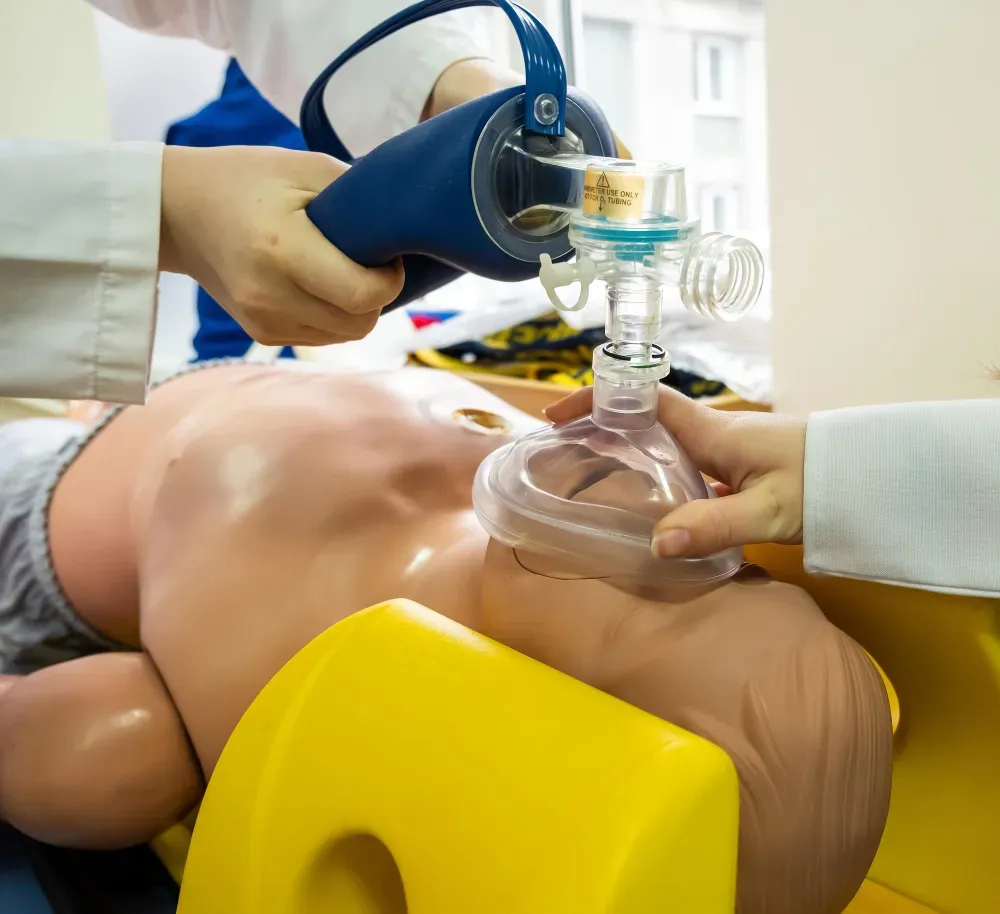
- Rescue Breaths: How to use a pocket mask to give oxygen safely without direct contact.
- The “Chain of Survival”: Knowing who to call, how to start CPR, and how to transition to paramedics.
Automated External Defibrillator (AED) Usage
An AED is a smart machine that can restart a heart. Your course should teach you:
- How to turn it on and apply the sticky pads to a bare chest.
- How to listen to the machine’s voice instructions and stay clear when it delivers a shock.
- What to do in special cases, such as if the person is wet or has a pacemaker.
Incorporating First Aid Skills
Many people choose to take a “Standard First Aid” course that includes CPR/AED. This is highly recommended because it covers other common emergencies, such as:
- Choking Management: The Heimlich maneuver for adults and special back-blow techniques for babies.
- Bleeding Control: Using bandages and even tourniquets for severe injuries.
- Medical Emergencies: Recognizing the “Face, Arms, Speech” (FAST) signs of a stroke or the warning signs of a heart attack.
5. Sustaining Proficiency: Keeping Your Skills Sharp
Getting your certificate is just the beginning. Research shows that CPR skills start to fade after just six months. To stay prepared, you need to think about how you will maintain your knowledge.
- Quick Refresher Courses: Many training centers offer “Renewal” classes. These are shorter and cheaper than the full course and are designed to “re-boot” your memory.
- Stay Informed on Guidelines: Every few years, organizations like the International Liaison Committee on Resuscitation (ILCOR) update the rules. For example, the ratio of compressions to breaths might change based on new science.
- Real-Life Insights: Read stories or watch videos about real-life saves. Seeing how others handled the stress can help you prepare mentally for the day you might have to step in.
Conclusion: Making Your Choice
Choosing the Right CPR/AED Training Program is an investment in your community. When you walk out of that classroom with a certificate in your hand, you aren’t just a student anymoreâ€â€you are a potential lifesaver.
Before you sign up, remember this final checklist:
- Check the requirements: Does my job need a specific level (like CPR Level C or BLS)?
- Check the reputation: Does the school follow Red Cross standards and have experienced teachers?
- Check the gear: Will I get to use a real training AED and a feedback manikin?
- Check the date: Is this course teaching the most recent 2020-2025 standards?
Emergencies are scary, but they are much less scary when you have the training to handle them. Take the leap, get certified, and be the person who knows what to do when it matters most. Your choice today could quite literally save a life tomorrow.
