If you have just been accepted into a nursing program at UBC, BCIT, Douglas College, or Langara, congratulations! You are about to start an exciting journey into the world of healthcare. However, before you can set foot in a hospital for your clinical placement, you have a long “to-do” list.
At Primary Care First Aid, we specialize in helping students navigate these requirements. One of the most common questions we get every semester is: “Which CPR level do I actually need for my placement?”
Is it CPR Level C, or is it BLS? If you book the wrong one, you might not be allowed to start your hospital rotation. This can delay your graduation and cause a lot of unnecessary stress. In this guide, we will break down the specific requirements for Vancouver Coastal Health (VCH), Fraser Health, and the major nursing schools in British Columbia.
What is the requirement for Nursing Students in BC?
For almost every nursing student in British Columbia, the requirement is Basic Life Support (BLS). While the general public and office workers usually take CPR-C, healthcare students must have the professional-level “BLS” certification to work in hospitals managed by Vancouver Coastal Health (VCH) and Fraser Health.
The Main Difference: Why CPR-C is Not Enough
Most people are familiar with CPR and AED Level C. This is a great course for lifeguards, fitness instructors, and the general public. It covers the basics of helping adults, children, and babies in an emergency.
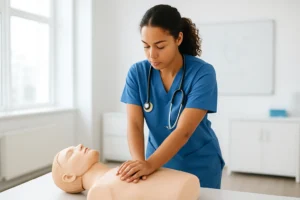
However, as a nursing student, you are not considered a “layperson” responder. You are a healthcare provider. Because you will be working in high-stress environments like Emergency Rooms, Surgical Units, or Intensive Care Units, you need a higher level of training.
Basic Life Support (BLS) is designed for people who work in a “team-based” rescue environment. It covers advanced skills that are not taught in a standard basic first aid course, such as:
- Bag-Valve-Mask (BVM) use: Learning how to use a manual resuscitator.
- High-Performance CPR: Working in a team of three or more to keep blood flowing perfectly.
- Pulse Checks: Learning how to identify ROSC (Return of Spontaneous Circulation).
- Rapid Assessment: Making life-saving decisions in seconds.
If you want to see a full breakdown of these differences, check out our detailed guide on BLS vs. CPR-C.
Vancouver Coastal Health (VCH) Requirements
Vancouver Coastal Health manages some of the largest hospitals in the province, including Vancouver General Hospital (VGH), UBC Hospital, and Lions Gate Hospital. If your clinical placement is through VCH, their policy is very clear.
All nursing, medical, and dental students must have a current Basic Life Support (BLS) certificate. They specify that the training must be from a recognized provider, such as the Canadian Red Cross.
Important Tip: Most VCH placements require your BLS to be renewed every single year, even if your certification card says it is valid for three years. Hospitals want to ensure your skills are “fresh” before you work with patients. You can learn more about maintaining your first aid and BLS certification on our blog.
Fraser Health and PHSA Requirements
If you are doing your placement in Surrey, Burnaby, Coquitlam, or Abbotsford, you will be under the Fraser Health Authority. Much like VCH, Fraser Health requires students to have the professional Basic Life Support for Healthcare Providers level.
The same rule applies to the Provincial Health Services Authority (PHSA). This organization manages BC Children’s Hospital and BC Women’s Hospital. Because these facilities deal with very specialized care for infants and children, they expect students to be experts in professional-level CPR.
School-Specific Requirements (UBC, BCIT, SFU, and Douglas)
Your school acts as the “gatekeeper” for your placement documents. They usually use a system called HSPnet to track your certifications. If you upload a Standard First Aid with CPR-C certificate when the system specifically asks for “BLS,” it will likely be rejected by the hospital coordinator.
- BCIT Nursing Students: You are strictly required to have BLS. Additionally, many programs at BCIT require Occupational First Aid Level 1 to meet workplace safety standards.
- UBC and SFU Students: For medical and nursing students, BLS is the standard. Many first-year students choose to take Standard First Aid with BLS so they can get both their first aid and healthcare-level CPR done in one weekend.
- Douglas College and Langara: Whether you are in Nursing or Dental Hygiene, BLS is the mandatory requirement for your clinical hours.
Can I take a “Blended” BLS Course?
We know that nursing students are incredibly busy. Between labs, lectures, and studying for anatomy exams, finding five hours to sit in a classroom is difficult.
The good news is that both the Red Cross and WorkSafeBC allow for Blended Learning. This is a great option where you do the “theory” part of the course online at home. Then, you only come into our classroom for a short, 2-hour hands-on skills session. This is often the fastest way to get your first aid training completed without missing school.
What Happens if I Book the Wrong Course?
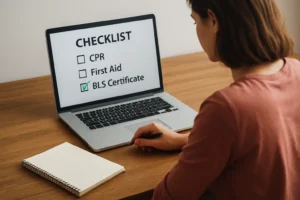
If you accidentally take a basic first aid course with CPR Level C instead of BLS, you won’t be able to use it for your hospital placement. Most schools and health authorities will not accept a “letter” from an instructor saying you are “good enough”—they need to see the official “BLS” title on your certificate.
To avoid this mistake, always look for the words “Basic Life Support” or “HCP” (Healthcare Provider) when you are booking. If you aren’t sure which level you need, you can read our guide on various first aid levels or contact our team for help.
Which Course is Right for You?
| Your Career Path | The Course You Should Book |
| Nursing Student (All BC Schools) | Basic Life Support (BLS) |
| Dental Student or Hygienist | Basic Life Support (BLS) |
| Medical Student or Resident | Basic Life Support (BLS) |
| New Student (Needs First Aid + CPR) | Standard First Aid with BLS |
Where to Get Certified in the Lower Mainland
At Primary Care First Aid, we are the leading provider of safety certifications in British Columbia. We understand the high standards required by VCH and Fraser Health, and we ensure our students leave our classes with the confidence and credentials they need to succeed.
We make it easy to find a class that fits your schedule:
- Vancouver: We offer frequent first aid courses in Vancouver near major transit lines, which is perfect for UBC and Langara students.
- Surrey: Our first aid courses in Surrey are held weekly to accommodate students from SFU and Douglas College.
Ready to get started?
Visit our homepage to learn more about our training centers, or check our Upcoming Course Schedule to book your BLS session today. Don’t let a paperwork error stop your clinical placement. Get the right certification the first time!
Frequently Asked Questions (FAQs)
Does my BLS certificate expire?
Yes. While some first aid cards are valid for three years, most BC Health Authorities require nursing students to renew their BLS every year. Always check your program’s specific handbook.
Is BLS the same as “CPR Level HCP”?
Yes. “HCP” stands for Healthcare Provider. A few years ago, the Red Cross and Heart & Stroke Foundation changed the name to “BLS” to match international standards. They are the same thing.
Can I fail a BLS course?
It is possible to fail if you cannot perform the skills correctly, but our instructors at Primary Care First Aid are dedicated to your success. We will work with you until you feel confident. You can read more about failing a first aid course here.
