
In life-threatening emergencies, every second counts. While many people know the basic ABCs of first aid, there is a more advanced tool called the MARCH algorithm. Originally developed for military medics on the battlefield, MARCH is now used by professional first responders to treat severe trauma. It helps rescuers prioritize the most serious injuries first, such as heavy bleeding, before moving on to other care. Understanding this system can help you stay calm and save lives during a critical accident in British Columbia.
What is the MARCH Algorithm?
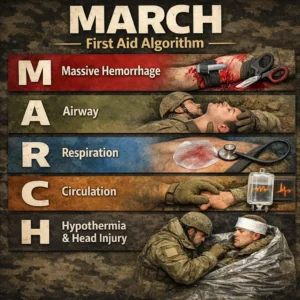
The MARCH algorithm is a step-by-step priority list used to treat severe trauma and life-threatening injuries. It stands for Massive Hemorrhage, Airway, Respiration, Circulation, and Hypothermia/Head Injury.ÂÂ

Breaking Down the MARCH Acronym
To provide military-grade care during an emergency in BC, follow these five steps in order:
M – Massive Hemorrhage
This is the most critical step. You must stop life-threatening bleeding immediately. In a Standard First Aid course, you learn to use direct pressure and tourniquets. If you have an individual first aid kit, now is the time to use your trauma supplies to pack the wound.
A – Airway
Once the bleeding is controlled, check if the person can breathe. Ensure the tongue is not blocking the throat. If you suspect a spinal injury, use the HAINES position to keep them on their side while protecting their neck.
R – Respiration
Is the person breathing effectively? Watch for the chest rising and falling. If they have a chest wound, it must be covered. This step ensures that oxygen is actually getting into the lungs.
C – Circulation
Check the person’s pulse and skin color. This step looks for “shock.” If their heart is racing or their skin is pale and clammy, they need medical help immediately. This is a key part of workplace first aid training.
H – Hypothermia and Head Injury
Even in a warm place, trauma victims can get cold, which prevents their blood from clotting. Keep the patient warm with blankets. Also, check for head injuries by seeing if they are “Alert” or “Unresponsive” using basic assessment tools.
MARCH vs. ABC: What’s the Difference?
Most people learn the ABCs of first aid (Airway, Breathing, Circulation). While ABC is best for medical issues like heart attacks, MARCH is the gold standard for trauma (like car accidents). In trauma, bleeding is the fastest killer, which is why MARCH puts it first.
Get Certified in BCÂÂ
Learning these skills is essential for first aid attendants and anyone working in high-risk jobs. Primary Care First Aid offers hands-on training across the Lower Mainland:
- Vancouver: First Aid Course Vancouver
- Surrey: First Aid Surrey
- Coquitlam: First Aid Course Coquitlam
Saves Lives with MARCH Techniques
The MARCH algorithm simplifies trauma care into a clear “battle plan.” By stopping massive bleeding first, you give a victim a much better chance of survival. Whether you are a workplace first aid attendant or a bystander at a car accident, knowing these five steps helps you stay calm when it matters most.
Ready to gain the confidence to save a life? You can master these military-grade skills in our Standard First Aid course training.
Don’t wait for an emergency to happen. Browse our full list of first aid courses and find a certification class near you in Vancouver, Surrey, or Coquitlam today!
