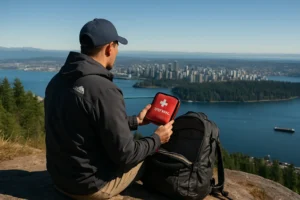
Living in the Lower Mainland means we have world-class hiking right in our backyard. Whether you are tackling the “Mother Nature’s Stairmaster” (The Grouse Grind) or enjoying the views from the top of the Stawamus Chief in Squamish, being outdoors is part of our DNA.
But here is the reality: even a “quick” hike can turn into an emergency. Every year, North Shore Rescue and Squamish Search and Rescue respond to hundreds of calls. Many of these emergencies start with a simple trip, a twisted ankle, or getting lost after the sun goes down.
Having a backpack is a good start, but what is inside that backpack? You don’t need a 20-pound medical bag, but you do need the right tools. In this guide, we will look at the 5 essential first aid items every BC hiker should carry.
What Are The 5 Must-Have Hiking First Aid Items?
For BC terrain, every hiker should carry:
- Blister Care: Moleskin or specialized blister bandages.
- Elastic Wrap (Tensor Bandage): For ankle sprains.
- An Emergency Whistle: For signaling when you can’t shout.
- Space Blanket: To prevent hypothermia if you get stuck overnight.
- Wound Cleaning Supplies: Antiseptic wipes and varying bandage sizes.
1. Blister Care (The “Grind” Essential)
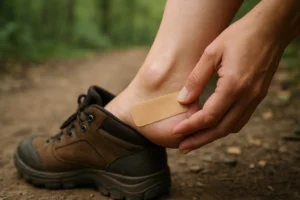
If you are doing the Grouse Grind or the BCMC trail, you are taking thousands of vertical steps. This constant friction is the perfect recipe for blisters. A blister might seem small, but on a steep trail, it can make it impossible to finish the hike.
- What to pack: Moleskin, athletic tape, or “Compeed” style gel bandages.
- Pro Tip: Don’t wait until it hurts. As soon as you feel a “hot spot” on your heel or toe, stop and apply protection.
For more advice on handling these types of issues, check out our guide on first aid for common injuries.
2. Elastic Bandage for Ankle Support
The trails on the Chief and the North Shore mountains are full of roots and loose rocks. One wrong step can lead to a painful sprain.
- What to pack: A 3-inch elastic tensor bandage.
- Why it’s vital: An elastic wrap provides compression and stability. If you sprain your ankle halfway up the trail, a proper wrap might give you just enough support to limp back down to the parking lot.
When you get home, remember to follow the RICER method for first aid to help your ankle heal faster.
3. The Emergency Whistle (Better than Your Voice)
If you get lost or injured and need help, your first instinct is to yell. However, the human voice gets tired quickly, and it doesn’t carry well through thick BC forests or over the sound of rushing waterfalls.
- What to pack: A loud, pea-less whistle (like a Fox 40).
- How to use it: Three short blasts is the international signal for help. It takes very little energy to blow a whistle, and the sound can be heard from kilometers away by search teams.
4. Space Blanket (The Life-Saver)
The weather in the mountains near Vancouver can change in minutes. It might be 20°C and sunny at the trailhead, but if you get stuck on the mountain after dark, the temperature can drop toward freezing.
- What to pack: A tiny, silver Mylar “space blanket.”
- Why it’s vital: These blankets weigh almost nothing and reflect 90% of your body heat back to you. It is the best way to prevent hypothermia while waiting for rescue. This is one of the most important hiking safety tips we can give.
5. Wound Cleaning and Small Bandages
Scraped knees and cut palms are common when scrambling over the rocks on the Chief. Because forests are full of bacteria, even a small cut can get infected if not cleaned.
What to pack: A few antiseptic wipes, a small tube of antibiotic ointment, and a handful of bandages in different shapes.
- Pro Tip: Include a few “knuckle” or “butterfly” bandages. These stay on much better when you are moving and sweating.
Why a Kit Isn’t Enough: You Need Skills
Carrying an individual first aid kit is a great first step, but do you know how to use it? In a high-stress situation, you don’t want to be reading a manual for the first time.
Most hikers benefit from taking a Basic First Aid course. In just one day, you can learn:
- How to properly wrap a sprained ankle.
- How to treat a victim for shock.
- What to do if someone has a heart attack on the trail.
- How to use the items in your kit effectively.
If you are a frequent hiker, you might even consider Standard First Aid. This two-day course goes into much more detail about head injuries and environmental emergencies like heat stroke and hypothermia.
Where to Buy a First Aid Kit?
If you don’t want to build your own kit from scratch, you can purchase pre-made kits designed for hikers. We have a full buyer’s guide on where to buy a first aid kit that highlights the best local and online options.
Just remember: always open a store-bought kit and add your own personal items, like any medications you take or extra blister care.
Hiking First Aid vs. General First Aid
| Item | Why Hikers Need It | Find it in… |
| Whistle | Signaling in a dense forest | Hiking Safety Kits |
| Moleskin | Long-distance trail friction | Individual First Aid Kit |
| Space Blanket | Unpredictable mountain weather | Basic First Aid |
| Tensor Wrap | Uneven terrain & sprains | Standard First Aid |
Be Prepared for Your Next Adventure
BC is one of the most beautiful places on earth to hike. But the mountains don’t care how much you “like” the outdoors; they require you to be prepared. By carrying these 5 items and knowing the basics of first aid treatment, you can enjoy the Chief, the Grind, and every other trail with peace of mind.
At Primary Care First Aid, we want you to explore BC safely. We offer weekend and evening classes throughout the Lower Mainland.
- Vancouver: Join a first aid course in Vancouver before your next North Shore adventure.
- Surrey: Sign up for first aid in Surrey to get certified.
Ready to get trained? Check our upcoming course schedule and find a class today!
For more safety tips and resources, visit our homepage or read our latest first aid certification blog.
