Getting your personal training certification is exciting, but the first aid paperwork can feel confusing fast. Between BCRPA’s own rules, ACSM’s exam requirements, and what your future gym actually wants to see on your resume, it is easy to book the wrong course. This guide breaks down the real requirement, the level most Lower Mainland gyms expect, and the fastest way to get certified before your registration deadline. By the end, you will know exactly which course to book and why it matters for your career.
BCRPA’s official minimum is Emergency First Aid with CPR Level A. However, BCRPA also accepts higher levels, and Standard First Aid with CPR-C is what most Lower Mainland gyms, rec centres, and personal training employers actually expect. ACSM requires a current Adult CPR/AED certification with a hands-on skills component before you can sit your exam.
That gap between the technical minimum and what employers want is exactly why so many new trainers get confused. Let’s break down each piece so you can plan your certification path with confidence.
Who Sets the Rules: BCRPA vs. ACSM
BCRPA (BC Recreation and Parks Association) is the provincial body most fitness leaders and personal trainers in British Columbia register with. It runs The Registry of Fitness Professionals, tracks your CPR and first aid dates, and requires proof of both before you can complete your Personal Training Instructor Competency Evaluation (ICE).
ACSM (American College of Sports Medicine) is a separate, internationally recognized certifying body. Many BC trainers hold both a BCRPA registration for local gym employment and an ACSM certification for a stronger national resume. Each organization sets its own first aid and CPR rules, so it helps to look at them one at a time.
BCRPA’s Official First Aid and CPR Requirement
According to BCRPA’s own FAQ and Personal Training ICE forms, the baseline requirement to register as a Fitness Student or Personal Trainer is:
- First Aid: Minimum of Emergency First Aid
- CPR: Minimum of CPR Level A
- Format: Must include an in-person, hands-on practical component. Fully online courses are not accepted.
BCRPA also states clearly that higher levels, including Standard First Aid and CPR Level C, are accepted and often preferred. Your certificates must stay current at all times during your registration period, and BCRPA can randomly audit your file to confirm your dates are accurate.
Why Standard First Aid with CPR-C Is the Smarter Choice
Meeting the bare minimum is not always the best career move. Standard First Aid with CPR-C covers a wider range of emergencies, including infant and child CPR, which Emergency First Aid and CPR-A do not. Personal trainers work with clients of every age and fitness level, from teenagers in group classes to older adults recovering from injury, so broader coverage matters on the job.
Most gyms, rec centres, and boutique studios across Vancouver and Surrey list Standard First Aid with CPR-C as a hiring preference, even when BCRPA’s technical minimum would allow less. Municipal recreation centres in particular tend to set their own internal safety standards that go beyond BCRPA’s floor. Choosing the higher-level course from the start saves you from having to upgrade later when an employer asks for more than you have.

BCRPA-Accepted Certification Providers
BCRPA only accepts first aid and CPR certificates from recognized training organizations. Approved providers generally include:
- St. John Ambulance
- Canadian Red Cross
- Heart and Stroke Foundation
- St. Mark James First Aid Training
Courses must include a live, in-person skills assessment. A certificate earned through a fully self-paced online course, with no instructor-led practical component, will not satisfy BCRPA’s requirement, even if it covers the same content on paper.
What ACSM Requires for Personal Trainers
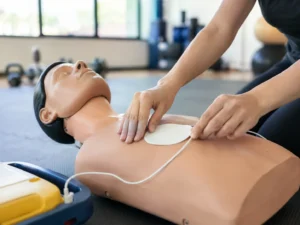
ACSM’s rule is more focused than BCRPA’s. To sit for the ACSM Certified Personal Trainer exam, you need a current Adult CPR/AED certification with a hands-on skills component. ACSM removed its old grace period in 2022, so you must complete this training before you can even schedule your exam, not after.
ACSM does not require a full first aid course the way BCRPA does, but most trainers pursuing both credentials find it more efficient to complete a combined Standard First Aid with CPR-C course. This single certificate satisfies ACSM’s CPR/AED rule and comfortably covers BCRPA’s requirements at the same time.
BCRPA vs. ACSM Requirements at a Glance
| Requirement | BCRPA (Minimum) | BCRPA (Recommended) | ACSM |
| First Aid level | Emergency First Aid | Standard First Aid | Not specified |
| CPR level | CPR-A | CPR-C | Adult CPR/AED |
| Hands-on component | Required | Required | Required |
| Online-only accepted | No | No | No |
| Renewal | Must stay current | Must stay current | Every recert cycle |
What Happens If Your Certificate Lapses
BCRPA requires your CPR and first aid certifications to stay current for your entire registration period, not just at sign-up. If your certificate expires while you are actively registered, you risk losing your standing until you recertify, and you could be flagged during a random audit if your file does not match your actual certificate dates.
The same logic applies to ACSM. If your CPR/AED certification lapses, most employers and insurance providers will treat you as non-compliant until it is renewed. Booking your recertification a few weeks before expiry, rather than the week of, keeps you working without any gaps. Our guide on maintaining your first aid and BLS certification has a simple system for tracking renewal dates.
Choosing the Right Course for Your Fitness Career
If you are only chasing the bare BCRPA minimum, Emergency First Aid with CPR-A will technically work. But if you want to be hire-ready across the Lower Mainland’s competitive fitness job market, Standard First Aid with CPR-C is the safer, more employable choice. It satisfies BCRPA, comfortably covers ACSM’s CPR/AED requirement, and matches what most gyms actually ask for during hiring.
Not sure which certification level fits your specific career path? Our breakdown of which first aid course you need walks through each option based on your job and industry.
Get Certified in Vancouver or Surrey
At Primary Care First Aid, we run in-person Standard First Aid with CPR/AED Level C courses across Vancouver and Surrey, built for fitness professionals who need a course that satisfies BCRPA, ACSM, and most gym hiring standards in one sitting. Every class includes a live, hands-on skills assessment, so your certificate is accepted the moment you upload it to The Registry.

Frequently Asked Questions
Does BCRPA require Standard First Aid or is Emergency First Aid enough?
BCRPA’s technical minimum is Emergency First Aid with CPR Level A. However, Standard First Aid with CPR-C is accepted, widely recommended, and preferred by most Lower Mainland gyms and rec centres.
Can I use an online first aid course for BCRPA registration?
No. BCRPA requires an in-person, hands-on practical component for both your first aid and CPR certification. Fully online courses without a live skills check are not accepted.
Does ACSM require a full first aid certificate?
No. ACSM requires a current Adult CPR/AED certification with a hands-on skills component before you can sit the exam. It does not mandate a separate full first aid course, though many trainers complete one anyway to satisfy BCRPA at the same time.
How often do I need to renew my first aid and CPR for BCRPA?
Your certification must stay current for your entire BCRPA registration period. Renewal timing depends on the certificate type, so check your expiry date in The Registry and recertify before it lapses.
Which first aid providers does BCRPA accept?
BCRPA accepts certificates from recognized providers such as St. John Ambulance, Canadian Red Cross, Heart and Stroke Foundation, and St. Mark James First Aid Training, as long as the course includes an in-person practical skills component.
Final Takeaway
The technical BCRPA minimum is Emergency First Aid with CPR-A, but that is not the certification most working trainers actually want. Standard First Aid with CPR-C meets BCRPA’s higher accepted standard, satisfies ACSM’s CPR/AED rule, and lines up with what gyms across Vancouver and Surrey expect from a hire-ready personal trainer.
Book the course that matches your career goals, not just the paperwork minimum, and you will walk into your first gym interview fully prepared.
