Canada’s current comprehensive CPR guidance in 2026 comes from the 2025 update released by Heart & Stroke on October 22, 2025. The update places renewed focus on rescue breaths for children and infants, early CPR and AED use, and improved emergency response training.
Here is what Canadians should know.
Are There New CPR Guidelines for 2026?
As of October 25, 2026, there is no newer comprehensive Canadian CPR guideline edition verified for this article. The 2025 guidelines remain the main update to understand in 2026.
These guidelines help shape CPR education and emergency response practices in Canada.
For an introduction to CPR equipment and training, read our CPR and AED training guide.
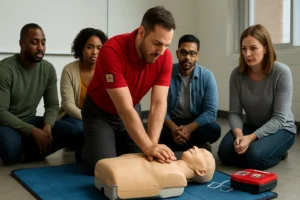
What Are the Most Important CPR Guideline Updates?
1. Rescue breaths are especially important for children and infants
Heart & Stroke now places renewed emphasis on rescue breaths during CPR for children and infants. This is important because breathing problems are a common cause of cardiac arrest in children.
People who care for young children may benefit from Infant and Child CPR Basics.
2. Early CPR and AED use remain essential
For a person who is unresponsive and not breathing normally:
- Call 911.
- Start CPR right away.
- Ask someone to bring an AED.
- Use the AED as soon as it is available.
- Follow emergency dispatcher and AED instructions.
You can learn these skills through CPR/AED Level C training.
3. Rescue breaths matter in breathing-related emergencies
Breaths can be especially important when cardiac arrest follows:
- Drowning.
- Choking.
- Certain opioid-related emergencies.
- Other serious breathing problems.
If you are not trained or cannot provide breaths, start chest compressions and follow emergency dispatcher instructions.
4. The update supports wider CPR education
The guidelines also encourage CPR education for younger learners, stronger community response systems, and wider awareness of naloxone for suspected opioid emergencies.
Our guide to becoming CPR and first aid certified explains how training works.
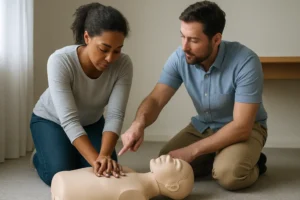
CPR for Adults vs Children
| Topic | Adults | Children and infants |
|---|---|---|
| Chest compressions | Essential | Essential |
| Rescue breaths | Recommended for trained responders | Especially important |
| AED | Use as soon as available | Use with suitable pediatric settings or pads when available |
| Training | CPR Level C or BLS as appropriate | CPR Level C includes pediatric skills |
Healthcare workers may require different training from general members of the public. Read BLS vs CPR Level C to understand the differences.
Do You Need to Renew Your CPR Certificate in 2026?
The guideline update does not automatically invalidate every existing CPR certificate. Renewal depends on the certificate’s expiry date and your employer’s requirements.
Our first aid and CPR recertification guide explains when further training may be needed.
Frequently Asked Questions
How many chest compressions are recommended for adult CPR?
For trained rescuers using conventional adult CPR without an advanced airway, the common sequence is 30 compressions followed by two breaths. Follow your current training and dispatcher instructions.
Is hands-only CPR still acceptable?
Yes. Chest-compression-only CPR can help an adult in cardiac arrest when a bystander is unable or unwilling to give breaths.
Do CPR guidelines change every year?
No. Major guideline editions are not necessarily released annually. Updates may also be issued when new evidence supports a change.
Learn Current CPR Skills in BC
CPR is a practical skill. Hands-on training helps people learn correct technique and respond with greater confidence.
Primary Care First Aid offers CPR and first aid courses for people in British Columbia.
Review the current CPR courses and choose training that matches your personal or workplace needs.
