As healthcare providers, we are trained to handle emergencies and provide life-saving care to our patients. One of the key skills that we are taught is first aid and Basic Life Support (BLS) techniques. However, the skills and knowledge acquired during our initial training can fade if not regularly practiced and updated. That’s why healthcare providers need to maintain their first aid and BLS certification. In this blog post, we will discuss the importance of maintaining these certifications and what healthcare providers need to know to ensure they are up-to-date and ready to provide quality care in emergencies.
The Importance of First Aid and BLS Certification for Healthcare Providers
First Aid and BLS certifications hold immense value in the healthcare sector, serving as a testament to a healthcare provider’s ability to perform under critical situations.
Enhancing Patient Safety:ÂÂ
Equipped with First Aid and BLS certifications, healthcare providers can swiftly recognize and respond to medical emergencies, ensuring immediate patient safety. They are trained to handle cardiac arrests, respiratory distress, wounds, and other emergency situations, significantly improving patient survival rates. At Primary Care First Aid, we provide comprehensive training designed to keep healthcare providers ready for exactly these moments.
Boosting Confidence and Preparedness:ÂÂ
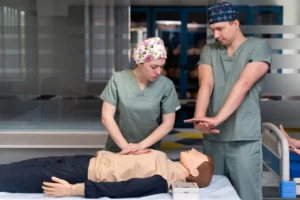
These certifications provide healthcare providers with the confidence to act decisively and efficiently during crises. The training equips them with a systematic approach to responding to emergencies, thereby reducing panic and confusion and promoting a faster, more effective response.
Whether you are enrolled in Basic First Aid or an advanced BLS program, hands-on training is what builds real confidence.
Fostering Trust:ÂÂ
Having certified professionals on your team is a powerful trust-builder for patients and their families. It assures them that their healthcare providers are adequately trained to manage emergencies, providing a sense of security. Providers who complete a first aid course are equipped with exactly the skills families rely on in critical moments.
Meeting Legal and Regulatory Requirements:ÂÂ
Many healthcare facilities require their staff to maintain valid First Aid and BLS certifications, as part of their licensing and accreditation process. These credentials are a must for certain job roles and specialties. Courses such as Intermediate First Aid are specifically structured to meet these professional and regulatory requirements.
Promoting Continuous Learning:ÂÂ
Recertification ensures that healthcare providers stay updated with the latest medical advancements, guidelines, and techniques. This continuous learning helps them adapt to the ever-changing medical landscape, thereby enhancing the quality of patient care.ÂÂ
Renewing Your First Aid and BLS Certification
Contrary to popular belief, First Aid and BLS certifications are not a ‘once and done’ deal. These accreditations require renewal every two years to ensure healthcare providers are equipped with the latest life-saving protocols. The renewal process typically includes a practical evaluation, offering an excellent opportunity to refresh and hone your skills.ÂÂ
The certification renewal also provides an opportunity to stay updated on key changes in First Aid and BLS protocols, thereby equipping healthcare providers with the knowledge and techniques necessary to deliver effective care in critical situations. Always remember, having an expired certification is as good as having none at all. So, keep your credentials up-to-date and continue to provide the best possible patient care.
Key Updates and Changes in First Aid and BLS Protocols
Just as the healthcare landscape evolves, so too do First Aid and BLS protocols. Staying abreast of these changes ensures healthcare providers deliver the most current, evidence-based care during emergencies. Here are a few notable updates that have been incorporated in recent years:
Compression to Ventilation Ratio:ÂÂ
One of the significant changes in BLS protocols has been the shift to a higher compression-to-ventilation ratio. The ratio of 30:2 for adults allows for greater circulation during CPR, enhancing the chances of successful resuscitation.
Use of Mobile Technology:ÂÂ
The role of technology in emergencies has been recognized, with guidelines now recommending the use of mobile devices to activate emergency response systems. In addition, apps and online tools are being integrated into the BLS curriculum to support training and performance in real-life situations. Our CPR/AED Level C course incorporates these modern approaches to ensure providers are trained on the most current best practices.
Emphasis on High-Quality CPR:ÂÂ
There has been a renewed emphasis on high-quality CPR. This means focusing on the depth and speed of compressions, completing chest recoil, minimizing interruptions, and avoiding excessive ventilation.
Changes in Medications:ÂÂ
The American Heart Association no longer recommends routine use of certain medications like atropine during cardiac arrest resuscitation efforts. This change underlines the importance of staying updated on pharmacological advancements and their incorporation in emergency protocols.
Continued Learning and Skill Enhancement
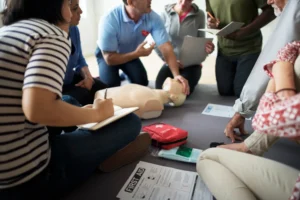
Staying at the forefront of First Aid and BLS techniques requires ongoing learning and practice. It’s not just about renewing your certifications every two years. It’s about making a conscious effort to keep your skills sharp and up-to-date. Engage in hands-on workshops, participate in seminar discussions, and take part in simulation activities. They provide the perfect avenue for refining your emergency response skills and absorbing new knowledge.ÂÂ

For healthcare providers who also work with children and families, our Emergency Child Care First Aid course provides specialized training that goes beyond standard BLS. Similarly, those supporting young families and caregivers in the community will find our babysitting course invaluable for building foundational emergency response skills.
Regularly putting your skills to the test in controlled environments will help reinforce your training and boost your confidence during real-life emergencies. Remember, healthcare is a dynamic field, and continuous learning is the key to keeping pace with its ever-evolving landscape. So, don’t let your training end at certification – view it as a stepping stone towards more advanced learning and skill enhancement.
Improving Your First Aid and BLS Response Time
Speed is of the essence when it comes to responding to emergencies. As healthcare providers, enhancing your response time to First Aid and BLS situations can dramatically increase the chances of patient survival. Incorporate regular drills and knowledge refresher courses into your routine to stay sharp. Participate in realistic simulations that mimic real-life emergencies.ÂÂ
These not only test your skills under pressure but also condition you to respond quickly and correctly. For providers across the Lower Mainland, our Red Cross Stay Safe course are excellent option for building rapid, accurate emergency response skills. Remember, it’s not just about acting fast, but also about acting right. So, keep polishing your skills and let preparedness be your watchword. Because in a race against time, every second saved could be a life saved.
Advanced First Aid and BLS Techniques to Enhance Patient Care
As healthcare providers, your commitment to continuous learning opens up a world of advanced techniques in First Aid and BLS that can dramatically enhance patient care.ÂÂ
High-Performance CPR:ÂÂ
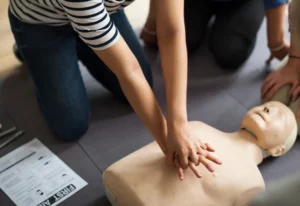
This technique focuses on perfecting the quality of chest compressions, minimizing interruptions and ensuring adequate depth and rate. It also emphasizes team dynamics and involves tasks like assigning roles, clear communication, and performing regular swaps to avoid fatigue.
Use of AED in BLS:ÂÂ
AEDs are often underutilized in emergencies. Proficiency in their use can dramatically increase survival rates in cases of sudden cardiac arrest. AEDs can also be used in tandem with CPR to maximize the effectiveness of resuscitation efforts.
Pediatric BLS:ÂÂ
Treating children during emergencies requires a different approach as they are anatomically and physiologically different from adults. Understanding these differences and learning pediatric-specific techniques can greatly improve outcomes in pediatric emergencies.
Understanding and Managing Respiratory Emergencies:ÂÂ
Respiratory emergencies can be a common occurrence, particularly in elderly or chronically ill patients. Techniques such as effective airway management and learning to administer supplemental oxygen can be life-saving.
Advanced Wound Management:ÂÂ
In cases of severe injuries, simple first aid may not suffice. Skills like wound irrigation, suturing, or application of tourniquets can prove to be vital.
Common Mistakes to Avoid During First Aid and BLS Situations
Even with extensive training, healthcare providers can make mistakes during high-pressure First Aid and BLS situations. Here are a few common errors to keep in mind and steer clear of:
Delaying Response:ÂÂ
Hesitation can cost precious seconds in an emergency situation. Uncertainty or doubt can often lead to delayed response, which can critically impact a patient’s chance of survival. Healthcare providers should regularly participate in simulated drills to build their confidence and speed up their reaction time.
Incorrect CPR Technique:ÂÂ
Incorrect hand placement, insufficient depth of compressions, or inadequate rate can diminish the effectiveness of CPR. Regular training and refresher courses can help maintain proper CPR technique and effectiveness.
Not Calling for Advanced Medical Support:ÂÂ
First Aid and BLS are initial measures, and while they are crucial, they are not a substitute for advanced medical care. Neglecting to call for advanced support can lead to severe consequences. Always remember, even as you initiate First Aid or BLS, ensure that help is on the way.
Misusing or Ignoring AEDs:ÂÂ
Automated External Defibrillators (AEDs) are a crucial component in resuscitation efforts, yet they are often overlooked or misused. Healthcare providers should be proficient in the use of AEDs and include them as a critical part of their emergency response.
Conclusion
In a nutshell, maintaining First Aid and BLS certification as a healthcare provider is not just about meeting regulatory requirements but it’s about ensuring that we can provide the best care possible when it matters most. It’s about constant learning, skill enhancement, and preparedness to respond effectively in critical situations. And remember, it’s not just about speed, but also about accuracy.ÂÂ
With continuous training, refresher courses, and staying abreast with updates, you can ensure that your emergency response is both fast and accurate. If you have any questions about First Aid and BLS certification, or renewal processes, or would like to know more about advanced techniques, don’t hesitate to contact us. Your commitment to enhancing patient care is commendable, and we are here to support you on that journey.
